How to Clean a Bottle Without a Bottle Brush
How to Clean a Bottle Without a Bottle Brush. Learn this simple, effective method for scrubbing narrow bottles and hard-to-reach areas naturally.
I have had many instances when I had to wash a slender bottle and I found myself with no bottle brush anywhere that I could find one. Brushes would not always be on hand whether I was commuting, washing a hummingbird feeder, or was struggling with an elusive bottle of smoothie at home. After some time I came to the realization that a bottle brush is useful, but by no means needed. And you can clean up a bottle without any special equipment whatsoever with plain stuff such as rice, soap, and water.
The procedure that I follow now is among the easiest hacks I have ever heard about. It only needs ingredients that can be found in your kitchen and it is also applicable to glass, plastic and stainless steel water bottles. It fits well in small areas, narrow necks and in corners that are difficult to reach. After I learned the effectiveness of this no brush cleaning technique I ceased to worry each time I lost my bottle brush. This method can deal with the coffee residue to a dried juice stain with ease.
Need the Essentials of Simple Tools You’ll Need
The best thing with this cleaning technique is that it involves use of things that are already in your home. You just have to have your dirty bottle, a spoon, a little rice, dish soap and clean water. I usually use ordinary uncooked white rice since it is hard enough to clean but soft enough not to scratch bottles. These ingredients are utilized as a natural cleaning process- the rice scrubs, soap dissolves and water takes it all away.
This combination is simple enough to provide you with a bit of friction so that you can clean areas of the inside that your hand or your sponge is unable to reach. The rice acts as miniature scrubbers, rolling inside the bottle pulling off the dirt, stains and residue. It is so easy and convenient a process that I have already done it hundreds of times when there were no brushes.
See more Water Bottles that we tested
Step 1: Add a Spoonful of Rice
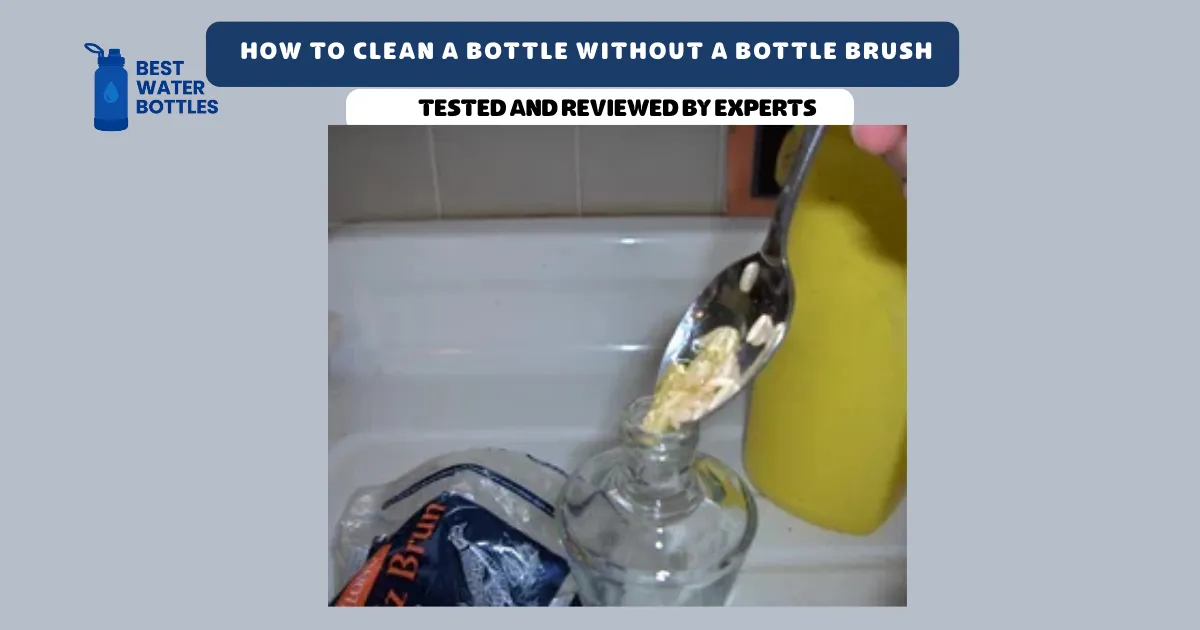
It begins with a spoonful of un-cooked plain rice. I tend to pour a teaspoonful; that is sufficient with all bottles, whereas higher ones take a bit more. Rice grains are the just right size to fit in corners and small spaces and the coarse texture serves to scrub your bottle without damaging it. It initially began as a gimmick that I only used in cases of emergency but it has become my cleaning method of choice.
When making the next step I hold the rice on the spoon before I put it into the bottle. The rice does not enter itself but due to the help of the soap, it is united. I was amazed by the fact that something as straightforward as rice can be a very effective cleaning agent that can get rid of residue and stains that are hard to reach inside a bottle.
Step 2: Add a Squirt of Dish Soap
In order to make the rice sticky and flow freely inside the bottle, I put a little squirt of dish soap on top of the rice. The cleaning mixture requires half a teaspoon of soap at maximum. The soap is the glue, which holds the rice in position and can be easily pushed to the bottom of the bottle without spilling everywhere. This is another action and process that favors the rice scrub more because it moves in the bottle.
Any type of dish soap is good in this case and should earn the ability to foam and cut grease. The soap is also useful in the removal of residues of the drinks particularly when you have taken smoothies, coffee, or juice and left it in the bottle. It is a minimal thing, however, it simplifies the procedure and streamlines it significantly.
Step 3: Slide Rice and Soap to the Bottle
After putting the rice and the soap on the spoon, I tip them into the bottle. The soap does not allow the rice to bouncing off the rim or falling on the counter. This ensures that it is easy to clean and everything is smooth. The method is ideal even on bottles that have very narrow openings.
as soon as the mixture is within, I give the spoon a slight tap to ensure that all the rice is falling through the opening. I soon found you could be more patient, rushing along could get one in a mess, however, taking it slow and pushing the mixture into place kept everything under control.
Looking Something for the Outdoors? Check These Out
Step 4: Add Water in order to activate the Scrubbing Action
Now it’s time to add water. I tend to fill the bottle half way and there is adequate room in which the rice will move without getting stuck. Warm water is even better since it aids in dissolving substances and oils of beverages such as coffee or sports drinks. When water is introduced the mixture turns into soft, natural scrubbing solution.

Over half-filling the bottle restricts the motion of the rice therefore I have observed that half-way is the best. It enables the rice to roll, spin and scrub each part of the bottle. The water is added and the cleaning process commences once the bottle is ready.
Step 5: Shaking, Swirling, and Rotating the Bottle
This section is not only gratifying, but also surprisingly useful. Holding a finger over the opening, I gently shake the bottle, stir it in various ways, and turn it upside down. The rice runs all over the bottle, cleaning the inside walls as small natural sponges would. Rotating and shaking will ensure that rice hits all corners, even those corners where the brushes cannot get.
I tend to do this between half a minute to thirty seconds. The rice serves as hundreds of mini scrubbing beads, scraping away the stains and residual drinks as well as the dirt within the bottle. In the case of a bottle that has not been washed in a long time, I shake it a little longer. This mere movement succeeds better than I had thought.
Step 6: Rinse the Bottle and then empty
After the scrubbing is completed, I pour out the mixture of rice, soap and water. Occasionally there are some grains that are attached to the bottle, however a quick run under water gets them off without any difficulties. One should make sure to wash with a lot of water in order not to leave any soap on the bottle even though he or she may be using it to store water or any other beverage soon after cleaning it.
I prefer to take a shower under warm water using my fingers until the water becomes clear. When I am washing an object such as a humming bird feeder or a bottle that contained something sweet, I rinse even more thoroughly. The bottle appears clean and seems to be refreshed after the rinsing process without necessarily using any special equipment.
Learn More in Our Water Bottle Guides
When This Brush-Free Cleaning Approach Should be Used
This rice trick is fantastic when you have no bottle brush to use but it can as well be applied when you are travelling or cleaning something with a very awkward shape. I frequently apply it to glass bottles, insulated bottles, hummingbird feeders and glass jars that are used as decorations. It fits perfectly in bottles that have a small opening and your hands can not reach most of the brushes even though the bottle has a small opening.
You can also use it on the days you only want a quick cleaning solution and you do not need to move in the drawers to find the tools. The procedure is rapid, trustworthy and surprisingly strong. Regardless of the size or form of the bottle, the rice never fails to get into some places where the sponges cannot. It is an easy remedy which I now employ on a regular basis.
See my comparison of different Bottles & Tumblers
Additional Cleaning Trick: Feeder Optional Bleach Rinse
When you are washing an object such as hummingbird feeder or a container that has been used to store some sweet liquids, it is good to rinse it with a small amount of bleach at the end. Once the rice and the soap mixture have been rinsed I usually would pour the mixture into the bottle filled with water and a small splash of bleach. I allowed it to sit several minutes after which it was rinsed with clean water.
This is a voluntary step but it is guaranteed that bacteria, mold spores and sugar residue are eliminated. And just ensure that bleaching is harmless to the material used in the bottle, and ensure that it is thoroughly rinsed following. The rice-and-soap technique only suffices well with most water bottles.
Why This Method Works So Well
I still wonder how powerful such an unsophisticated approach can be. The rice is a sort of scrubber, the soap melts away the dirt, and the water is used to get everything flowing through the bottle. It is a natural, safe, and cheap method that functions where the brushes fail. I have in the course of years applied this system to a great variety of bottles, and have never lost by it.
The best thing about it is that it does not scratch stainless steel or glass. It is soft enough to use on any bottle and tough enough to get the off the dried on stuff. This simplicity and effectiveness is what makes me continue using it up to date despite finding it by chance.
Honest Water Bottles & Tumbler Reviews You Can Trust
FAQs
Final Thoughts
Washing a bottle with the help of no bottle brush does not have to be hard and exasperating. Five minutes with mere rice, soap and water will scrub even the narrowest bottle. This has rescued me dozens of times when I could not find brushes, and it has turned out to be one of my favorite cleaning practices. It is not complex enough to use on a daily basis and strong enough to handle difficult residue.
This is a game-changer, especially if you had problems cleaning the small bottles or just were not in the right place at the right time, as far as the tools were concerned. It is secure, safe and can be done anywhere. After trying it you may find yourself reaching to the rice more than to the brush than you would have expected.