How to Remove Rust Stains from Stainless Steel Bottles
Learn how to remove rust stains from stainless steel bottles using vinegar, baking soda, lemon, salt, soda, and simple scrubbing tricks. Keep your bottle clean and rust-free.
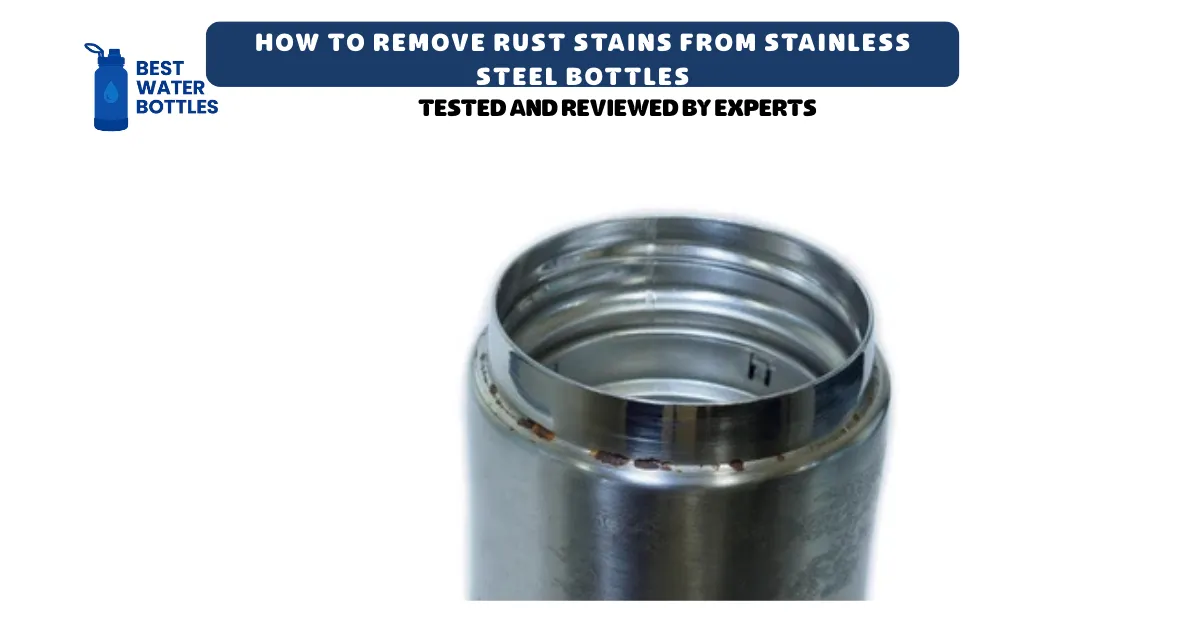
I also thought that stainless steel bottles do not rust at all but after a few years of usage I found out that even the high-quality steel can leave rust marks, given the appropriate environment. Stainless steel does not rust, it is rust-resistant and minor scratches, moisture, or even remaining metal particles may undermine the surface protective layer of chromium. Once that wall has been broken, rust starts to develop, particularly at the places where the water lingers. It is one of the simplest ways to notice rust in time, that is why checking your bottle on a regular basis is a good idea.
The majority of insulated and reusable bottles are fashioned out of 18/8 and 18/10 stainless steel which has high resistance to corrosion. However, in case the bottle has been exposed to firm detergents, salty liquids, acidic beverages, and extended wetness, discoloration and rust spots can still be observed. This has been observed to be mostly in the bottom corners of bottles and around the mouth where moisture is retained. The positive bit of this is that when you obtain rust early in time, it is normally very easy to get out with the help of some basic household goods that are available in your home.
What makes the stainless steel bottles rust?
It is easier to prevent rust when one knows what causes rust. Even the minute scratches in your bottle can trap moisture and this forms crevice corrosion. Even the microscopic leakages on the steel may contain droplets that will gradually corrode the metal. The other usual one is dissimilar metal corrosion as particles of the cheaper steel tools or scourers are attaching themselves to your bottle during cleaning they rust first and cause it to appear that the bottle is rusting. I once had a scrub pad that was not made of stainless steel and I immediately regretted it when the rust spots formed a week later.

In the low oxygen or acidic conditions rust can also develop. Indicatively, when you leave coffee, juices, or electrolyte drinks in your bottle over an extended period of time, the acid gradually corrodes the protective coating of chromium oxide. Stainless steel remains rust-free because of the reaction with oxygen hence, when oxygen is unable to access the surface, the corrosion becomes more probable. Ways to preserve this natural protection is by keeping your bottle dry, clean and well ventilated so that rust does not form at all.
See more Water Bottles that we tested
The reason why Stainless Steel Still is not 100% Stainless
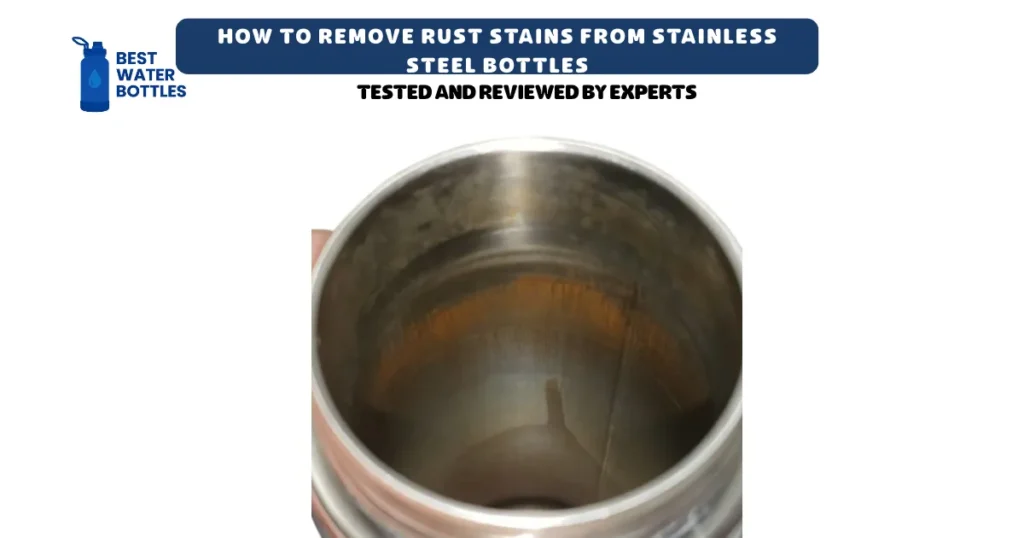
Stainless steel is not entirely resistant to corrosion although it is designed to support it. The coating on the surface is not thick and when it is scratched or contaminated, rust may develop very fast. I have also been taught that even high-grade stainless steel may turn discolored should it be exposed to salty conditions or kept even when wet. You will see on it some dark brown streaks, or some orange spots, or some mists–those are the first indications of oxide disintegration.
The degree of resistance to rust is dependent on the steel grade. Bottles that are produced using 304 or 316 stainless steel are very robust, whereas less-grade steel bottles easily rust. The process is only increased by exposure to moisture, acidic beverages or by incorrect cleaning tools. After realizing that stainless steel is not invincible, you can do the right things to ensure that the material does not stain over the years and is free of rust.
First Method: Removal of Rust using the White Vinegar
I have always used white vinegar as my preferred way of removing rust since it is natural, it is gentle and very effective. Vinegar would have acetic acid and that deteriorates rust without harming the stainless steel surface. Whenever I see rust in my bottle, I entirely immerse the affected part in white vinegar and allow the solution to stay overnight. The more rust there is the longer the soak must be–at least 12 hours to do the best.
Once I have soaked it, I pour out the vinegar and use it to scrub the rusty areas using the dish brush or stainless steel safe pot scrubber. At this stage the loosened rust normally can be washed off with ease. When the rust is removed, I rinse the bottle with warm soapy water and thoroughly rinse. This has rescued some of my bottles particularly those that have become rusty at the bottom where moisture accumulates. Vinegar is inexpensive, secure, and among the most appropriate rust removers.
Looking Something for the Outdoors? Check These Out
Ingredients: Baking Soda and Water Paste
Another ingredient that I use when rust comes is baking soda. It is not that harsh and is safe to stainless steel hence is ideal to scrub without scratching. My method of using it entails adding a tablespoon of baking soda in warm water until the mixture becomes thick paste-like. Then I applied the paste directly on the rust spots and allowed it to dry over a period of one hour in order to soften the rust. This provides the soda of baking time to elevate the oxidation of the steel.
After the paste has dried I use a sponge or soft brush scrubbing the baking soda over the rust. Having rinsed the bottle with a lot of water, I repeat the process in case the rust remains in sight. Baking soda is also useful in counteracting smell hence this is a good method when rust is accompanied with nasty smell. It is among the safest means of cleaning the stainless steel bottles without interfering with the protective layer of chromium.
Learn More in Our Water Bottle Guides
Recipe 3: Lemon Juice and Baking Soda
Lemon juice is my cleaning solution of choice whenever I feel like having a clean that is both environmentally friendly and gives me a fresh smell. Lemon also has citric acid that acts like vinegar but smells much better and makes the metal shiny as it cleans. Combining the same quantities of baking soda and lemon juice forms a bubbling paste which assists in rust dissolution and in scrubbing the rust away. I put the mixture into the rust spots, leave it to dry in 30 minutes and scrub until the stain fade away.
It is applied to mild to moderate rust stains especially. I have applied it to some of my older bottles that required rust removal as well as deodorizing. It is a good alternative to vinegar smell that is not so desirable, but a natural cleaning product performing well. The lemon also smells of clean and refreshing, which is also an added advantage of the bottle.
See my comparison of different Bottles & Tumblers
Procedure 4: Salt and Hot Water Scrub
A lot of people do not pay much attention to salt as an abrasive cleaner. The sharpness of the edges of the crystals is a scrubbing action of minute parts that are able to remove rust without destroying the stainless steel. This is the technique that I employ when I want to use it, where I put coarse salt in the bottle, pour in hot water, and shake it vigorously. The salt scours the inside and the hot water pussies the rust. In case I need to increase the cleaning power, I will add some vinegar to the combination to loosen oxidation further.
After shaking a few minutes, I pour the mixture and wipe the rest of the rust off using a sponge. This technique is also very handy since there is no need to soak it and it is effective when you are in a hurry. Salt is non-toxic, cheap and surprisingly good in light rust deposit. It is among the fastest methods of restoring the interior shine to the bottle.
Method 5: Dissolution of Rust by making use of Soda
A strange cleaning agent may be the last thing we would consider soda, yet it is carbonated and has phosphoric acid and thus comes with surprising power on rust. The first time I used this technique, I used a small stainless steel bottle that I put in cola overnight and was amazed at the level of its effectiveness. The fizz is used in breaking away rust and loosening off of the surface of metal oxide. It is not the quickest fix, but it is excellent when you do not want to work hard and needs to do the job as you sleep.
I rinse the rusted part with a sponge dip in the soda after soaking, in order to get the greatest cleaning action. After the rust is raised, I pour lots of warm soapy water in the bottle to cleanse the bottle of the sticky residue. It is soft on stainless steel and a good choice on the occasions that you do not have either vinegar or baking soda.
Honest Water Bottles & Tumbler Reviews You Can Trust
Procedure 6: Washing with Potato and Dish Soap
Another trick that I have found to be most surprising to attempt is the use of a potato to clean rust. Oxalic acid is the natural rust remover that is produced in potatoes and some commercial cleaners. In order to apply this technique, I sliced the potato into half, rubbed the cut side with the dish soap or baking soda and applied it on the rusty part of the object after a few minutes. The rust is dissolved by the acid and the texture of the potato offers the gentle scrubbing effect.
The potato must be rubbed on the rust, and then with little rubbing the stain will be removed. I then rinse off and dry the bottle and the rust is removed. It is a brilliant technique when you desire something soft and natural and free of harm to food surfaces. It is also suitable in exterior rust stains which cannot be reached at the inside.
Toothpaste Toilet Rust Remover
One of the least difficult rust removers is toothpaste, which is easy to carry in your bag or pocket in case you are traveling or just do not have cleaning materials around. It has mild abrasives and cleaning agents that remove stains and this makes it also handy in rust removal. I also put a thin layer of toothpaste on a damp cloth/sponges and rub it on the rust spots. The paste can be left to rest after an hour to dislodge surface oxidation.
I scrub the bottle after which I rinse the bottle with a lot of water and then clean it with warm soapy water to clear off residue. Toothpaste does not correct great rust but it is the best in the quick appearance of minor stains. Its the ultimate emergency cleaner that is required when you are in a hurry and you have lost your regular supplies.
Preventing the reoccurrence of rust
After removing the rust, the trick of ensuring that it does not reappear is the secret of maintaining that new appearance of your bottle. I discovered that it is a significant difference between drying my bottle fully and then storing it or not. Water is the greatest cause of rust and hence leaving the bottle open and in an inverted position prevents rust. One more point is that it is also advisable to avoid long storage of acidic beverages such as juice or coffee in order to minimize the risk of rust.
The other useful habit is the employment of the appropriate cleaning tools. Do not scrub stainless steel with non-stainless metal scourers they will leave microscopic particles of iron which will rust in the future. Use nylon brushes, soft sponges or steel scrubbers that are specially designed to clean. Frequent deep cleaning also makes the protective coating of the bottle robust and adhering to such practices will see your stainless steel bottle stay stain-less in the long run.
FAQ: Remove rust Stains from stainless steel bottles
Final Thoughts
It is not as hard as it seems to remove rust on stainless steel bottles. You can easily and safely repair your bottle using vinegar, baking soda, lemon, and salt which are readily available in the house. I have tried this a number of times and they are very successful especially on interior rust stains as well as exterior stains. It is all about early treatment of the rust and keeping the bottle in good condition to stop future rusting.
A stainless steel bottle is a sustainable long lasting investment, and it can be used lasting years as long as it is well taken care of. Wash it frequently, dry well and keep it properly. As soon as you know the way rust is made and how you can easily take it off, you will be able to keep your bottle clean in the most efficient way.