
How to Deep Clean a Straw Lid Without Special Tools
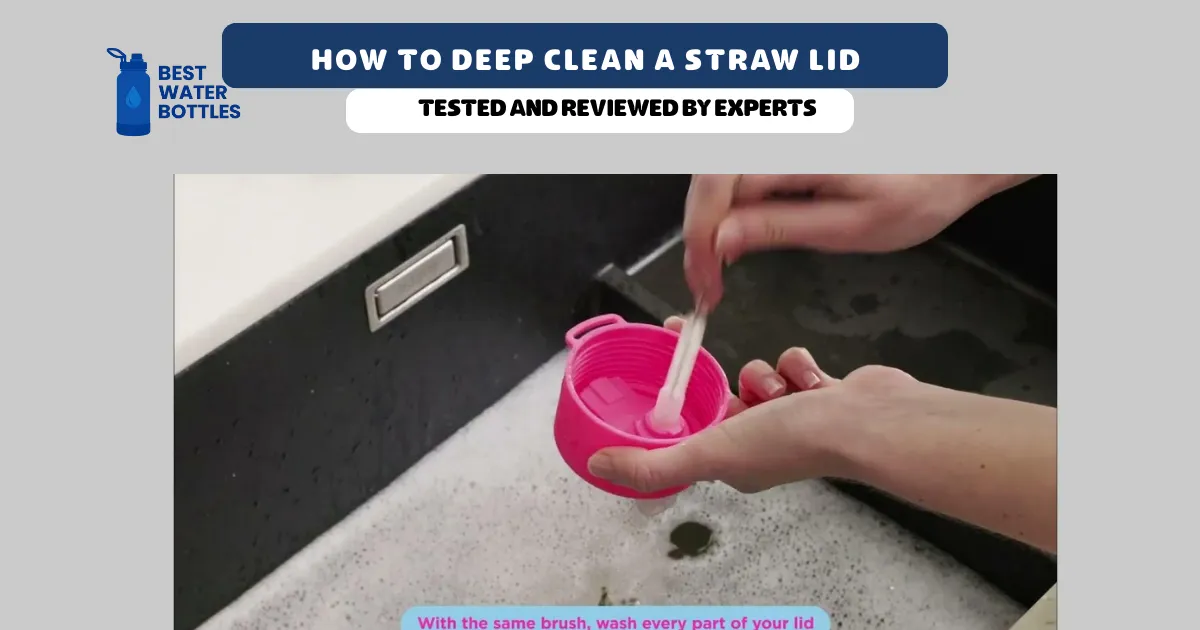
How to Deep clean a straw lid without special tools using simple soaking, shaking, and natural methods. Remove residue and odors to keep your bottle fresh and hygienic.
I did not know how fast the residue could be accumulated in the straw-lid bottle and under the gasket and around the mouth piece when I first began using my straw-lid bottles on a daily basis. The top of the outside appearance of the bottle could be so misleading because sometimes, when you looked at the inside of the straw, there were always stubborn smells or hazy layers that could not be removed with just a quick rinse. It was after I had the bad experience of having a funny taste in my water that I realized that I should have a better solution to clean my straw lid more thoroughly regularly using simple techniques that I can perform at home.
The trickle aspect of straw lids is that they contain liquid in small holes where bacteria may develop without any notice. Smoothies, electric drinks, iced coffee, and flavored water result in the sticky residue, which sticks to the inside part of the straw. In the event of improper cleaning, this residue will dry hard and give off bad smell. The process of learning to thoroughly clean the whole straw lid without any special equipment took the water bottle to a new level and made it feel fresher, safer, and much more pleasant to use.
Begin with an Entire De-packaging of the Straw lid
I always begin by taking my whole straw lid, bit by bit, to pieces, before I clean it. The silicone gasket and threading of the lid provide shelter to strawberry seeds, coffee residue and other small particles. These areas are not considered by most of the people and they wonder why their bottle still smells despite washing it. Cutting out the straw, gasket, and all flexible components, I will be able to access all the hidden areas where moisture and bacteria accumulate with time. Learn How to Deep Clean a Straw Lid Without Special Tools.
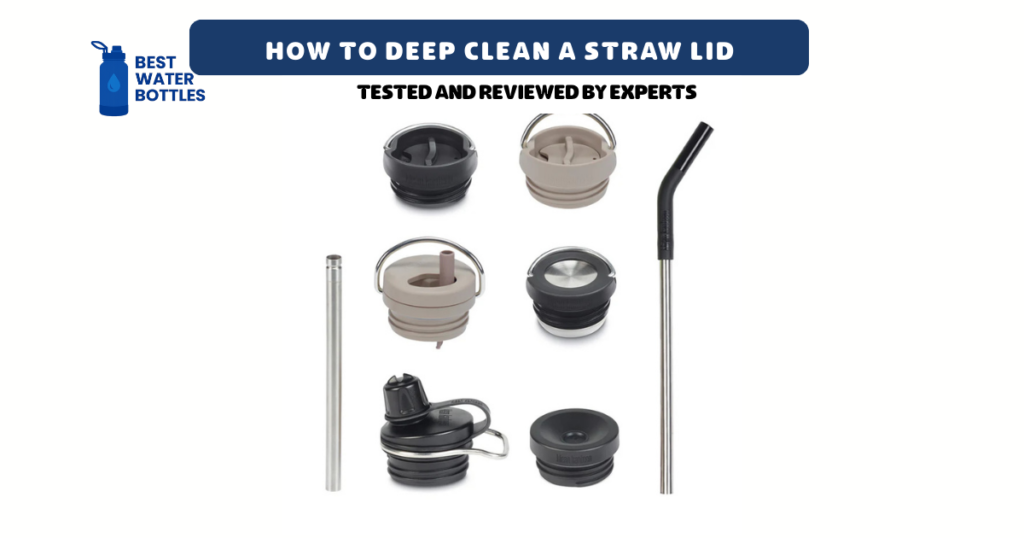
After all the dismantling, I also examine the gasket since this is where most of the accumulation is deposited. In case the gasket appears foggy, sticky, or oily, it should be cleaned deeper. Disassembling the lid also enables me to know how the parts are joined together, and this makes it easier to clean them next time. Deep cleaning will always be initiated with proper disassembling, particularly in the case when you do not have special tools.
See more Water Bottles that we tested
Rapid Rinse Solution to Clean Everyday
In the normal day-to-day maintenance, a simple rinse-up is sufficient to avoid accumulation before it begins. I run the straw lid under warm running water ensuring that some water is passed through the inside of the straw too. This aids in flushing out no residual fluid, which may turn into bacteria in the future. Such a small step consumes only several seconds but cuts the odors and residue down dramatically.
I also put a small amount of light dish soap on the tip of the mouth and the lid with my fingers. Finger pressure again performs remarkably well in removing soft residue and this occurs even in the absence of a brush. The trick is to be consistent-you should rinse the lid each time you fill the bottle up, that way it will be less dirty between the deep cleaning time. This routine keeps the inside of the straw clean and has discouraged any sticky residue that is even harder to clean at a later date.
Looking Something for the Outdoors? Check These Out
Simple but Effective
At times I do not even have a straw brush present so I have to resort to merely washing my hands in order to access as much as possible. I use the straw to fill it with warm and soapy water by wetting one end with my finger, shaking and letting the soapy water run through. This is used to loosen debris that is inside the straw without the use of any particular tools. This I repeat severally until the water clears off and the stench is eliminated.
With the lid and gasket I apply my fingers to scrub the ridges and rubber areas. Silicone is pliable, and therefore, I would use a soft stretch of the gasket to clean the inside edges where the accumulation is fond of staying. Running under a lot of warm water is the sure way to get all the soap out of the straw or even the lid. Although tools are not needed, this technique is effective when it comes to normal cleaning and maintaining the lid as hygienic until the next thorough cleaning.
Intensive Cleaning Baking Soda Soak
Once my straw lid begins to take on a resinous smell or appearance I resort to a baking soda soak. Baking soda is soft yet strong loosens the accumulation, gets rid of odor’s and assists in the removal of cloudy film in the inside of the straw. I put one tablespoonful of soda baking powder into a bowl mixed with warm water and then completely immerse the lid, straw and the gasket. Allowing 20-30 minutes of soaking time of the baking soda allows time to dissolve hard-to-clean residue.
Learn More in Our Water Bottle Guides
When wet I shake warm water through the straw to remove all that might have been loosened by the baking soda. This comes in particularly handy in the cleaning of residue of smoothie or coffee without the application of brushes. Baking soda deodorizes the lid and counteracts the smell that cannot be removed only using soap. This is a very cheap and easy way of deep cleaning and it is one of my favorites.
Vinegar as a Natural Deodorizing
Another strong cleaning agent that can be used is white vinegar particularly when it is necessary to deodorize my straw lid. I place the white vinegar and warm water in a bowl in equal proportions to each and the straw parts are moistened in about 30 minutes. Vinegar dissolves bacteria, removes sour odor and assists in dissolving oil or greasy residue that leaves the lid stinking. It also cleanses the straw in a more natural manner with no cruel chemicals.
I never fail to rinse off after soaking to deposit vinegar smell, but with warm water. I occasionally add to this by leaving it in a little baking soda to make it very fresh. The vinegar and baking soda mixture does get rid of the odours and sterilizes the lid and the straw again delicious. It is an ideal way of doing it when I would like to have a natural deep clean but would not like to use any special cleaning equipment.
See my comparison of different Bottles & Tumblers
Homemade Hydrogen Peroxide Deep Cleanse on Tough Stains
When there is a sticky residue of flavored drinks or smoothies in the straw, I rely on the solution of hydrogen peroxide and baking soda. To make a strong cleaning solution, I add half a cup of hydrogen peroxide and two tablespoons of baking soda to the solution. A 20-30 minute soak of the straw lid in this mixture lifts stains, deodorizes the straw, and removes hard deposits which cannot be removed by soap alone.
When there is very stubborn residue in the straw I employ a pipe cleaner, when none of this is available, I give the straw a good shaking with the solution in it. Hydrogen peroxide will be very useful in killing bacteria and doing away with the straw without ruining the material. Once everything is rinsed with warm water the lid is virtually a new one. The approach is among the best deep cleaning methods which I have applied.
Straw Lid Drying to avoid Stench
I never paid much attention to the significance of drying before until my bottle acquired a musty smell despite the cleaning. The moisture which is left in the straw or the gasket readily becomes bacteria which causes odor. I have now adopted the habit of leaving all of the components on an open-air drying drying rack after every wash. I put the straw on its feet so that the water will flow out of its own accord.
To dry lids that take longer to dry, I wipe the gasket with a paper towel and leave it to dry naturally. It is necessary to make sure that all is completely dry and then reassemble, or the straw will become mildew, and its smell will be unpleasant. It is as important as proper cleaning and proper drying particularly in parts with narrow areas such as the straw lids. This is an easy practice that has rescued me off the odours and the deep cleans.
Honest Water Bottles & Tumbler Reviews You Can Trust
Cleaning the Straw lid
As time went on, however, I realized that frequent maintenance will decrease the necessity of intensive deep cleaning sessions by far. I can rinse the straw lid whenever I fill my bottle again, wet it once a week and look after the gasket to see whether it has residue. My clean process on my straw lid has become more common and easy due to the fact that it is never set too hard. This maintains the hygiene of the lid and extends its life span.
It is advisable to maintain a basic cleaning method so that the straw lid can work efficiently regardless of the beverage that I consume. Whether it is smoothies or the iced coffee, proper maintenance makes each and every drink taste fresh. These tool-free and effortless cleaning techniques are handy and convenient to deep clean. Being more regular with little daily steps, the less deep cleans you will have to have with time.
FAQs: How to Deep Clean a Straw Lid with no Special Tools
Final Thoughts
The knowledge of how to clean a straw lid in depth without any special equipment has enabled me to keep my bottles easily. It can be made with basic home products such as baking soda, vinegar, and hydrogen peroxide and is simple to use in order to eliminate smells, get rid of bacteria, and even clean the straw lid itself. Taking the lid, getting the parts wet, and then thoroughly drying it so that it all tastes clean and fresh is a guarantee of creating a fresh experience each time. These simple measures ensure that my straw lid is working better and being of longer life.
After I had developed these habits, my bottles remained cleaner and my drinks fresher. And most importantly, I am no longer concerned about the possibility of leaving behind some traces or unpleasant odors to destroy my hydration practice. A straw lid can be kept clean and hygienic and be used reliably without special equipment due to regular cleaning and drying. Such uncomplicated practices simplify the task of deep cleaning, make it effective and an element of a healthy daily routine.