How to Disinfect a Water Bottle After Illness
Learn how to disinfect a water bottle after illness using bleach, peroxide, or boiling. Remove odors, kill germs, and know when to replace contaminated parts safely.
The first thing that came to my mind after having recovered a hard illness not long ago was the fact that germs could so easily camouflage in the things that I use on a daily basis and it is the water bottle that comes to my mind first. I have it on me at all times, fill it up every time, and touch it dozens of times in a day. Without proper sanitization of a bottle after some illness, it may accommodate bacteria, virus, and biofilm that generate long-lasting smell or sickness or mold. That is why it is important to disinfect water bottle after being sick as much as washing hands or changing toothbrush.
I have also been informed that there are no bottles that can be salvaged once they have been severely contaminated. In case a bottle has taken in some odors, developed mold or had interaction with something dangerous like decomposing food or organic materials, a replacement might be safer. However, in the case of high-quality stainless steel or glass bottles with the intact parts, a well-conducted deep-cleaning procedure will be able to restore it safely. Knowledge on how to disinfect bottles and which ones could be recycled has enabled me to keep hygiene in high regard.
When You Need to Dispose of a Poisonous Bottle at Once
Sometimes it just does not pay to have a bottle. Whether there are porous areas on the bottle such as silicone straws, foam lids or rubber gaskets, which have taken up biological or odor the process of sanitizing can hardly be done reliably. It is these materials that trap bacteria deep inside and it can never be fully disinfected by scrubbing or soaking. Whenever I see mold growth in parts made of rubber or silicone, I will always replace them instead of exposing them to danger of contamination.
Bottles holding decomposing organic matter, strong smells, slime forming or biofilm should also be disposed of in the same manner. The cheap plastic bottles also have a tendency to absorb odour and bacteria into microscopic pores in the long run. These materials can be unsafe even with deep cleaning. I have over the years learned that being on the safer side is always the better side, particularly after sickness or drastic contamination. Replacement bottle is very expensive relative to at risk loss of your health.
Materials to use in safe disinfection
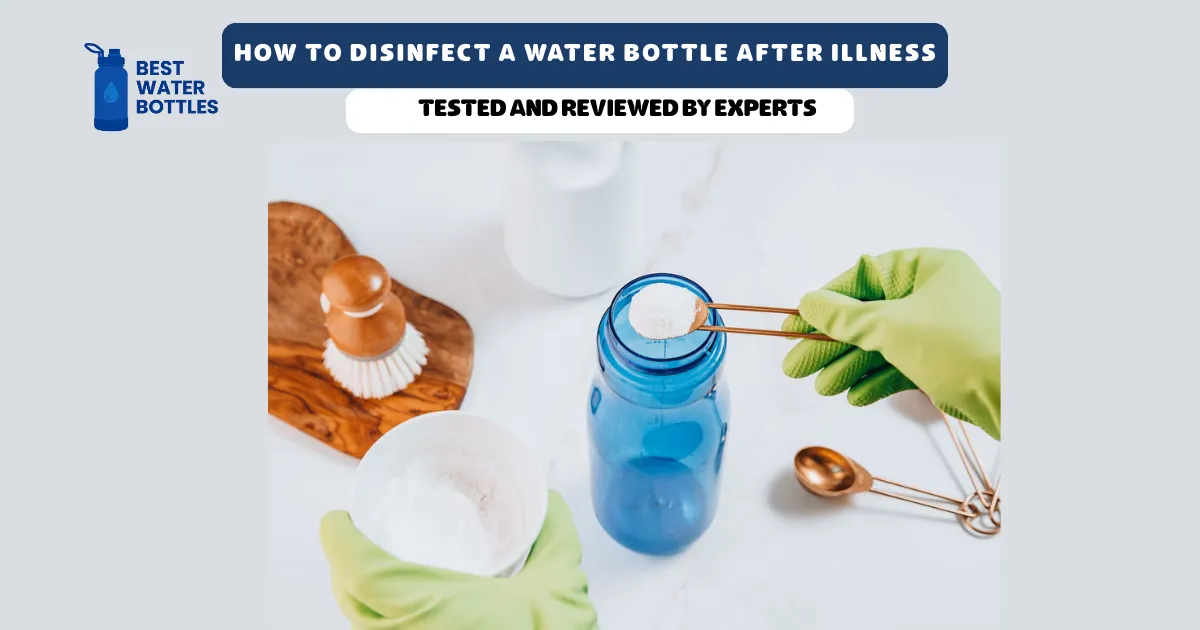
Whenever I intend to disinfect a bottle, I ensure that I get the appropriate materials on the first instance to avoid the haste of doing it. A bottle brush and dish soap are necessary to clean the residue of each corner of the bottle. In the case of the disinfecting step, I use either bleach, hydrogen peroxide or boiling water depending on the material of the bottle. Both of the methods are effective, yet not all of them are safe with all of the bottle components.
I have white vinegar, baking soda and clean towels as well because these are useful when it comes to deodorizing and finishing. In case of any contamination that was extreme, I wear gloves and do not have direct contact with the residue. Preparation can make sure that I am able to clean the bottle effectively not missing any steps. In matters of illness, thoroughness is important.
See more Water Bottles that we tested
1st step is to empty and pre-rinse the bottle
I always make sure to empty the bottle to the last bit, before I begin scrubbing, I also clear the bottle of solids with the help of gloves. When contamination occurs, I would want to limit the handling and exposure as much as possible. Hot water can be sprayed inside to loosen the debris and the cleaning is easy. This preliminary rinse will also show any slime or biofilm which must be removed in scrubbing.
When I am cleaning some stainless steel or glass bottle, I use as hot water as I can comfortably manage. Hot water is known to dissolve oils, colonies of bacteria and looseness clinging to the walls. After the first rinse, the first step, I proceed to the deep scrubbing step which is critical to entirely restore the bottle.
Step 2: Hand Washing to get out the visible residue
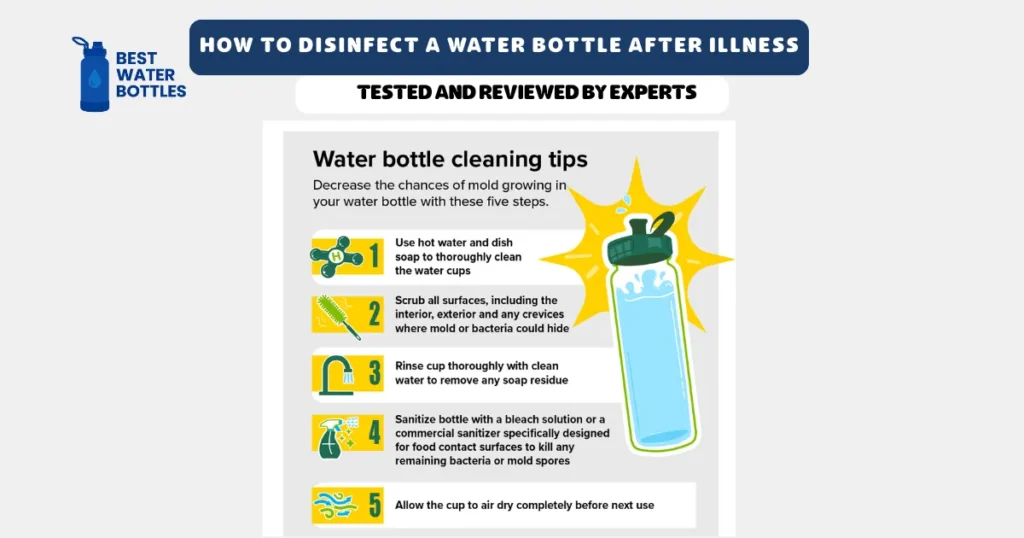
The most significant aspect of disinfecting a bottle after sickness is scrubbing since it will get rid of the organic substance that disinfectants do not permeate. To clean the inside of the bottle, its bottom, and the neck, I apply hot, soapy water and a stiff bottle brush to scrub the walls and the bottom of the bottle, as well as the neck. I will always have an additional time cleaning the threads surrounding the opening since dirt always gets embedded there. The area that is left behind may protect bacteria under the influence of chemical disinfection, and that is why I clean it with a scrub until it is clean.
Special attention is to be paid to the lid and mouth-piece, which are the favorite abodes of bacteria. I take everything that can be taken apart to pieces and rub around the seals, under the caps and in the openings of the straw. Although on some occasions I believe something looks clean, I rub it down, as there may be traces of contaminants that cannot be seen. Once this has been done then the bottle must be visually clean and then proceed to chemical disinfection.
Looking Something for the Outdoors? Check These Out
Step 3: Preparation Before Disinfection by Rinsing
I wash the bottle as well with hot water to eliminate all the soap and loosened residues after scrubbing. The presence of soap does not allow disinfecting solutions to work, and therefore before proceeding I ensure that the inside is slick to touch. This rinse is also useful in washing the remaining biofilm. In case the bottle remains cloudy or slime is left visible, then I repeat the process of scrubbing until it becomes clear.
This measure also makes the bottle ready to whatever disinfectant I may have to use. Bleach, hydrogen peroxide, or boiling water, a clean surface is used to make sure that the technique used in disinfecting is effective. After the rinsing process, I am now prepared to take the sanitation step which eliminates all the harmful microorganisms.
Learn More in Our Water Bottle Guides
Chemical Disinfection (Three Proven Methods)
Option A: Bleach Soak to be as disinfected as possible
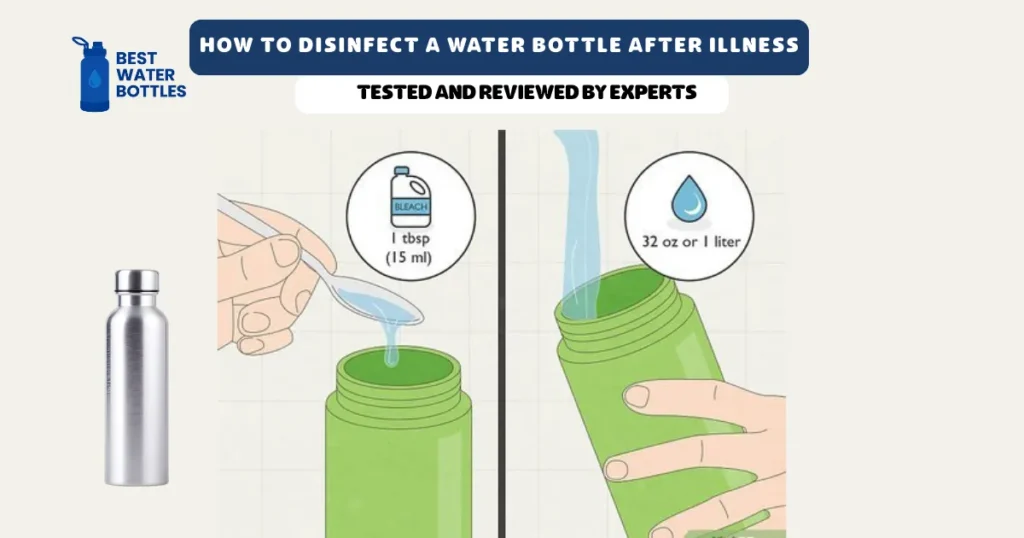
I use a solution of bleach diluted when I require the best disinfecting solution. Bleach has a high bacteria, virus and mold resistance. I combine 1:50 grade of dilution, say, one table of household bleach with 750mL of water and fill the bottle to the brim. I would also immerse any removable sections in the solution. Sitting without any rush and allowing everything to sit 2-5 minutes is sufficient in high level of sanitation.
In case of high contamination I would soak it to 10 minutes. When it has been soaked, I run under a lot of hot water until there is no smell of bleach. This technique is also potent, yet harmless provided that it is combined properly and washed properly. In the case of the heavily contaminated bottles, my best solution is bleach.
Option B: soap Hydrogen Peroxide
In case I need a milder disinfectant that is not bleach, I prefer hydrogen peroxide. I add 3 percent of hydrogen peroxide in its original form and fill up the bottle. It is a solution that kills bacteria and gets rid of the odors without harming the stainless steel or glass. I also allowed the parts and the bottle to soak 10-15 minutes then thoroughly rinsed.
Hydrogen peroxide does not leave any residual harm and it is simple to wash away. Particularly effective with the sour smelling or musty odor of the bottle following sickness. This is also effective in individuals who choose to have a bleach free sanitizing solution.
Option C: Stainless steel and Glass Boiling.
Boiling is among the most effective and natural ways of disinfection of bottles which can withstand heat. I take the bottle apart and place the parts made of metal in the boiling water and leave it there 5-10 minutes. This destroys bacteria, viruses and majority of the contaminants without chemicals. I will never boil plastic lids or silicone sealings unless the manufacturer assures that these are heat proof.
Simple bottles with no electronics or no delicate components can be boiled. It is a dependable technique but it needs to be done with caution without bending lids or breaking seals.
See my comparison of different Bottles & Tumblers
Deodorizing (Optional) of persevering odors
Some bottles might not get rid of offensive fumes even after disinfection, particularly those that came in contact with mold or organic contamination. In the case of this, I make a baking soda paste and rub the inside. Baking soda is used to counter any deep odor and to eliminate any leftover residue. I also rinse and in some cases, keep the vinegar soak 10-15 minutes in order to odorize more.
Combined with baking soda, vinegar copes with nearly all the odors the bottle can have. As soon as odors vanish, the bottle is fresh, clean and is safe to use again. This additional step of deodorizing comes in handy particularly when the illness or contamination has been long.
Drying and Inspection of the Bottle
I would then rinse the bottle and leave it to air dry completely upside down. Bacteria can be re-regrowing in stagnant moisture, and thus, it is necessary to dry well. I place the bottle on a clean drying rack or towel to ensure that the bottle is raised up and there is no water accumulated at the bottom.
After the bottle is dry, I examine the lid, gasket and the mouthpiece. A spot of discoloration, a lingering odor or even a broken seal indicates that the part must be changed. The safety in the long term is ensured by the final check, as the bottle is as clean as the ingredients that it contains and learn How to Disinfect a Water Bottle after illness.
When the Bottle and Parts should be replaced
There are just bottles that are not worth saving. When the odor of a bottle remains unchanged even after some time, there are deep scratches or cracks, which harbor bacteria, I change the bottle immediately. Low quality plastics have the disadvantage of permanently taking the contaminated materials and being unable to be disinfected. This is the same case in silicone seals that are still stained or smell even after washing.
It is the case that replacing worn parts may be cheaper than replacing the whole bottle. Numerous brands have replacement gaskets and lids. When the structure of a bottle has not yet been broken, then replacing the lid or seals is a wise way of making the bottle last longer without breaking. The ability to determine when to change or when to reuse ensures that I am well protected and maintenance is made easier.
Honest Water Bottles & Tumbler Reviews You Can Trust
FAQs: How to Disinfect a Water Bottle
Final Thoughts
Washing a water bottle after being unwell is not challenging, although it entails intensive procedures as a way of ensuring safety. I have over the years been taught how cleaning, scrubbing, disinfecting and drying leave hand in hand to restore a bottle to its original state. I either use bleach, hydrogen peroxide, or boiling, but it is the consistency and observation. A disinfected bottle does not only save my health, but it also lasts a lot longer.
I currently make taking care of water bottles a component of my health. Being aware of when to disinfect deep and when to change a contaminated bottle, I will be able to have safe and clean hydration. Even badly contaminated bottles can be refurbished with the right methods- or even safely put to rest where the need arises.