How to Maintain Insulated Bottles for Longer Life
How to Maintain Insulated Bottles for Longer Life. Learn daily care, deep cleaning, removing metallic taste, and when to replace old bottles.
After purchasing insulated bottles for the first time, I treated them in the same way as water bottles and I did not even think about cleaning and storing them. It was not so long until strange odors, faint metallic flavors and persistent stains were to be seen. That is the moment when I understood that insulated bottles require deliberate attention in order to remain fresh and do their job. An insulated bottle would otherwise stay hygienic, odor-free and last years and not months with the right maintenance routine. Even the slightest consideration helps to maintain its insulation performance and the general quality.
Through time, I also came to know that dirty insulated bottles do not only have a bad smell, but they may be holding bacteria, mold and residue, which impacts on taste and safety. Dismissing these indicators reduces the life of the bottle as well as its capacity to retain hot or cold drinks. After embracing the right cleaning habit, my bottles started remaining clean and functioning as new. Insulating a bottle is not so difficult, however, consistency and proper methods are necessary.
Deep Cleaning Methods for Odors and Tough Residue
Washing my insulated bottle on a daily basis even when I only filled it with water was one of the most beneficial habits that I have developed. The bacteria, food particles and oils on flavored beverages which would be sticking to the inner surface are removed by warm soapy water. Rinsing with water is not sufficient, soap dissolves the leftover that would otherwise develop into mold or a dirty mouth. This is a basic cleaning routine one should do daily and keeps the bottle hygienic so that the accumulation does not root.
I would give the bottle a vigorous shaking with warm soapy water and then rinse until the bubble in it is gone. This eliminates residual soap flavor which may influence the succeeding drink. In case I have a bottle with a gasketed lid or straw, I take apart the top to wash it all in order to keep it clean. It does not require much time to clean the bottle daily, but it significantly prolongs the duration of its existence and maintains a fresh taste of each drop.
Intensive Cleaning Techniques of Smells and Hard to remove signs
Every time my insulated bottle acquires an unusual smell or begins to taste bad, I resort to such deep cleaning agents as vinegar or baking soda. A vinegar bath is also effective as far as odors are concerned- simply fill the bottle with a 1:1 vinegar-water solution and leave to sit a few hours will dissolve the residue and destroy odor causing bacteria. This mixture is particularly efficient following the storage of coffee, tea or electrolytes that deposit oils.
In case of thick smells, I put a paste of water and baking soda into the bottle. Baking soda eliminates odors and it does not leave any stain on the stainless steel. I left the paste to rest a few hours and then thoroughly rinsed it. These more thorough cleaning procedures restore my insulated bottle to the state of a like-new object whenever it is necessary to wash it daily. This can be done by knowing when to deep clean and this will ensure great taste and hygiene.
See more Water Bottles that we tested
Why New Stainless Steel Bottles Sometimes Taste Metallic
A metallic taste was one of the problems that I encountered when using new stainless steel bottles, which led me to doubt whether the bottle was safe. Fortunately, these tastes do not require complicated reasons. During production, it can sometimes get stuck on the interior by manufacturing some residues small particles of polishing or oil. These do not pose any danger but influence the taste, until the bottle is washed several times. Good bottles such as stainless steel do not leech chemicals, it just requires proper initial cleaning.
The passivation layer is the natural protective layer of stainless steel and this is also another reason. There is slight interaction of this layer with water early on in the beginning of use, giving a metallic taste. It is entirely normal and fades away quickly as strange as it sounded when I was first introduced to the notion of it. The taste contribution can also be made by even high mineral tap water. The cause was so easily comprehended that it was easy to rectify without considering the quality of the bottle.
How to eliminate metallic taste on stainless steel bottles
A vinegar rinse is my favorite way of eliminating metallic flavor. I take a bottle and fill it with vinegar and four parts of warm water and shake the bottle gently and leave it to rest a few hours. In the case of long lasting taste, it is ok to leave it overnight. When I wash the bottle in a lot of water later the metallic taste is virtually gone. This technique is quite easy, efficient, and non-harmful to stainless steel.
Baking soda will be my second tactic when I do not find vinegar sufficient. I place a warm water (then I put in 2 teaspoons of baking soda and leave it standing at least an hour). The baking soda is used to neutralize the taste fast and eliminate the residue left. The bottle is again clean and fresh after rinsing and washing using the dish soap. These procedures are not complicated and at the same time, they are highly effective particularly in the case of new bottles.
Looking Something for the Outdoors? Check These Out
Finding Longer Life of Insulation Layer
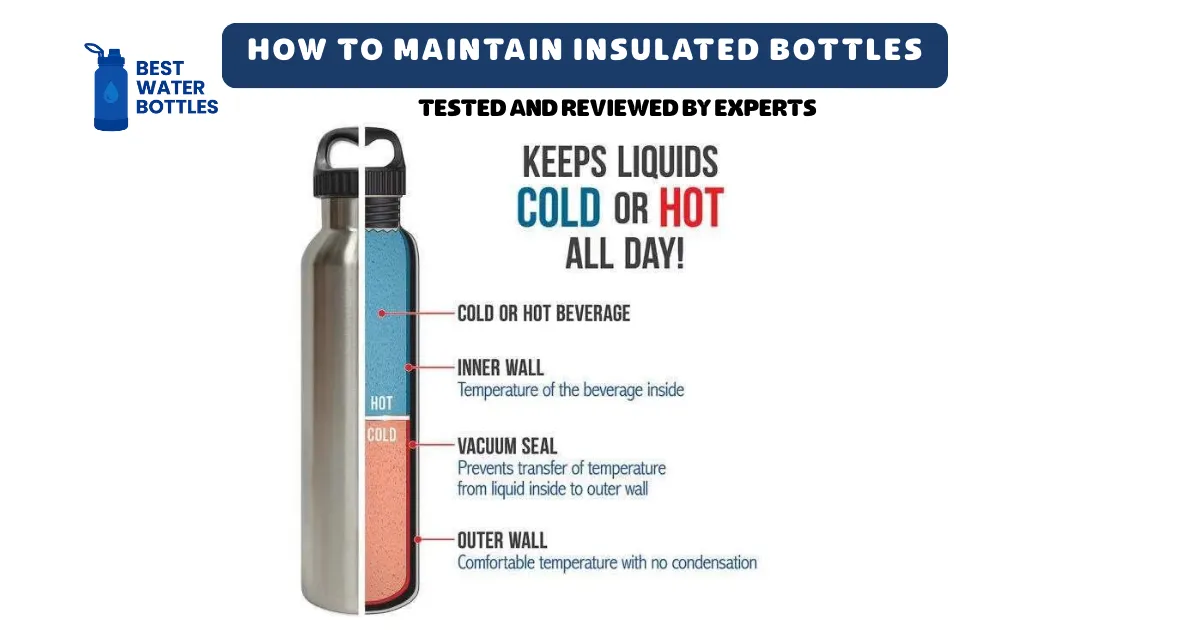
A wrong thing that I did initially was to place my insulated bottle in the dishwasher. Though most of the lids are dishwasher-safe, the bottle itself is not typically so. Dishwashers may rip off the insulation put on by vacuum and weaken the retention of temperature. Now, I never use a dishwasher to clean the bottle and I always do it manually using light soap and warm water. This does not allow the heat to damage the inner wall and the insulation continues to work well.
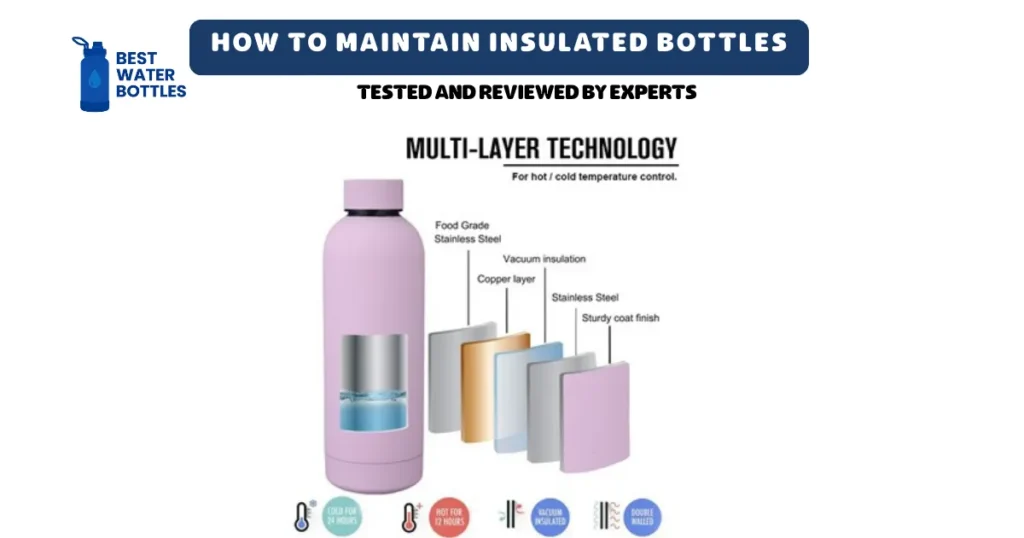
I do not also boil water in the insulated bottles unless the brand itself gives permission to do so. The vacuum seal can be damaged in case of abrupt temperature fluctuations or the metal can be deformed. I use warm but not boiling water during cleaning so as to maintain insulation. By maintaining the insulation, the bottle would maintain a 24 and 12-hour keeping cold and hot of drinks respectively, which is the case.
The importance of using Gasket and Lid Care
I used to ignore the lid, yet it is the most significant element as far as the leaks, aroma, and hygiene are concerned. Silicone gaskets are moisture absorbing and harboring of the bacteria unless cleaned regularly. I take out the gasket about after every couple of days, wash it and make sure it is dry before I replace it. This helps to avoid moulds and avoid the bottle acquiring that nasty old water smell.
Gaskets become stretched, cracked or dry in the course of time. On occurrence of this, they lose the ability to seal properly resulting into leaks and loss of temperature retention. The process of replacing the gaskets within the same time of six- to twelve months has allowed me to remain in good condition with my bottle. The lids and gaskets are clean and healthy, which allows the whole bottle to last much longer.
Learn More in Our Water Bottle Guides
How to Store Your Bottle to Avoid Odors
My habit of keeping my insulated bottle with the top off was one of the easiest but most effective ones. Humidity is trapped indoors making it the ideal place of mold and unpleasant odors. Air circulates and causes the escalation of humidity when left open, thus preventing the growth of the bacteria that causes odor. This habit alone radically decreased the number of deep cleaning.
My bottle is also placed on a drying rack with an inverted position after each wash. This would make sure that the bottom does not get wet, so there are no spots of moisture and not a lot of minerals. The bottles are well stored, which preserves them and extends their shelf life. It is just that clean and dry bottles last longer and always taste better.
See my comparison of different Bottles & Tumblers
How to know when to change an Insulated Bottle
Not the most insulated bottle can be used forever. The most obvious indicator that it is time to change it is insulation breakdown when beverages cannot keep it cold or hot as before. The vacuum can be broken, permanently eliminating insulation by a dent on the bottom or side. I have unscrewed the bottle just because a single drop of it destroyed the vacuum.
The presence of rust, deep scratches, or mold in the inaccessible locations is also an indicator that the replacement is required. Stainless steel does not rust, but the interior is easily damaged by severe cleaners or utensils. In case the bottle cannot be thoroughly washed or starts to interfere with the taste on a regular basis, it is safer to change the bottle. With a properly insulated bottle, you can go through a lot of years before you start losing its effectiveness, but you can always know when it is time to replace it in order to remain drinking safe and fresh drinks.
Honest Water Bottles & Tumbler Reviews You Can Trust
FAQs – How to Maintain Insulated Bottles
Final Thoughts
Proper use of insulated bottles has changed my experience with such bottles fully. I can now have bottles that remain fresh, clean, and reliable over a number of years, rather than to deal with weird tastes, odors, and ineffective insulation. Making sure that the insulation of the vacuum is clean and well kept and taking care of them will ensure that your bottle is running like a new engine. Such little practices have a tremendous bearing on taste, safety, and life span.
So, you bring your insulated bottle either to the coffee shop, cold water, smoothies, or the great outdoors, you can always be sure of your experience because it is well-maintained. When you have a clue of what to taste when it is metallic, when it is time to change something, and when you need to change the old parts, then you save your money and have a cleaner, fresher drink every day.