How to Remove Mold from Water Bottle Lids Safely
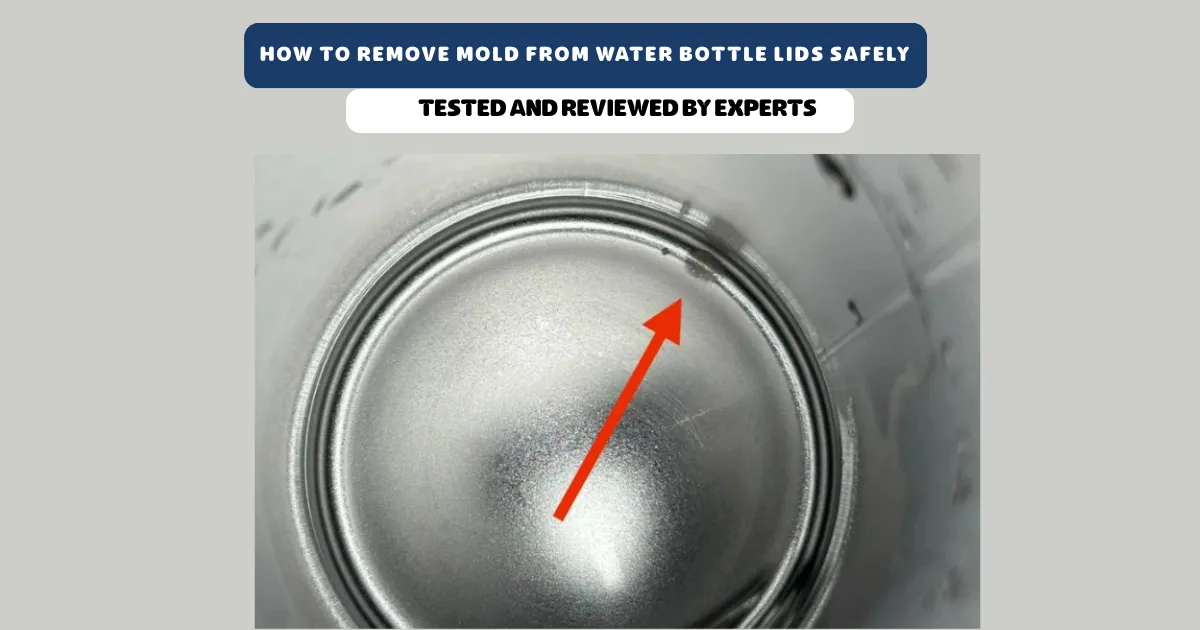
How to remove mold from water bottle lids safely with simple steps. Follow easy cleaning methods to eliminate mold, prevent odors, and keep your bottle fresh.
At first, I was quite surprised when I got to know how mold can be easily produced on the lids of water bottles. Although you might be using only clean drinking water to fill your bottle, the moisture that is held inside your lid is the ideal dark and damp place that can harbor the growth of mold. Since the majority of the accumulation is done under caps, in rubber gaskets, and in minute crevices, it can be easily overlooked days. The mold has already grown by the time you notice the odor of something musty or the dark spot.
The other shocking thing that I came across is the speed at which mold develops when bottles are not washed on regular basis. We usually think that it is just water, and hence we keep using the same bottle without washing them over few days. With every drink, however, the saliva, bacteria, and minute food bits are moved into the mouthpiece upon which there is the opportunity to provide the mold food with nutrients. Knowing this basic process taught me that there is no compromise when it comes to cleaning hydrating the lid to ensure long-term health.
How to Determine the existence of Mold on Bottle Lids
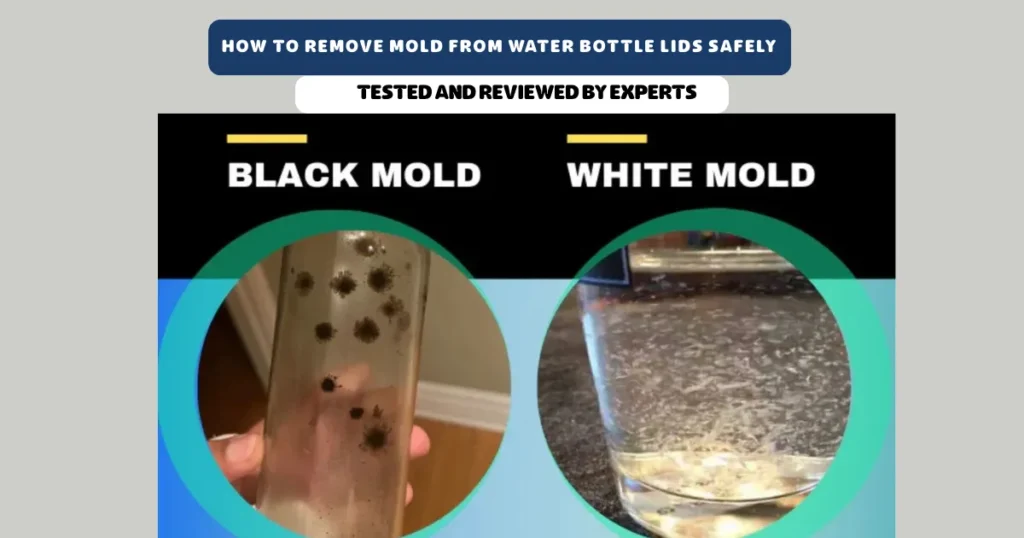
It is crucial to identify mold at the beginning and once you know what it is, you can identify it much easier. Mold can have a black, a greenish-black or a brownish appearance most commonly occurring beneath rubber seals or around threading. In other cases it presents itself in form of slimy patches or tiny dark dots around the mouthpiece. There is almost always a musty, earthy odor something like wet leaves, which is a sure indication the place is moldy even when you do not notice it.
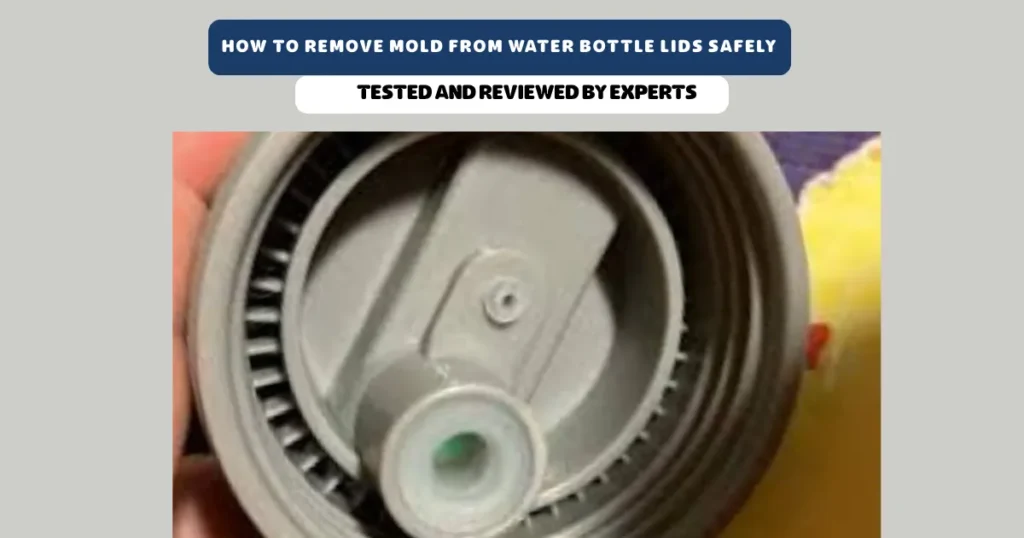
Discoloration of the gasket or the lid is another thing that I am attentive to. Most bottles in the market today have coloured caps that conceal dirt but mould still develops below. When I notice cloudy accumulation, oily residue or I feel that the water tastes odd, I check the lid immediately. Mold spores reproduce at a rapid rate and therefore their early identification makes the cleaning process easy and prevents the harmful exposure.
See more Water Bottles that we tested
Is it dangerous in case of Mold in water bottle lids?
Although not all types of moulds are toxic, I would never risk my life on something that I use on a daily basis. Black mold, especially, has been known to cause allergies, headache, irritation of the throat, and stomach pains. Even the non-toxic types of molds may cause reactions in some sensitive people. A water bottle lid would be the ideal breeding pool in case the spores of mould are not washed out.
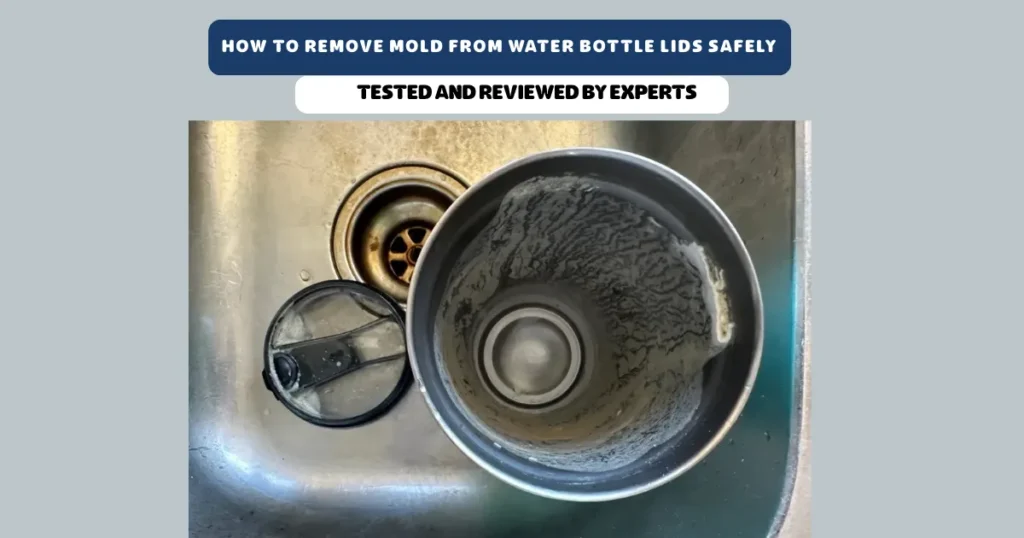
I have realized that there is slight contamination of mould that has the ability to change the taste and odor of the water itself, an obvious indication that something is not okay. Rather than asking myself whether the mold has been harmful or not, I would make the preventive action. My bottle is clean, fresh and hygienic as a result of regular cleaning. It is a little thing to take care of my health and make daily hydration a stress-free event.
How to get rid of Mold Step by Step
The step that I usually use to remove the mold on the lids of my water bottles begins with a basic warm water and dish soap soaking. I start with the lid dismantled, removing the straw, the gasket and anything that can be removed. This assists in revealing every concealed place where mold is likely to be found. After leaving the whole soaked in a few minutes, I then scrub the edges, grooves, and even the rubber seals using a small brush. The disparity is immediately felt as soon as the slimy residue is scraped off.
I wash all with hot water after the first scrub to remove the cast off mould and soap. In case of stubborn molds, I go through its procedure again to make sure that there are no parts that are not adequately disinfected. This is a simple, step-by-step cleaning method that does not use any special equipment and is applicable to all kinds of water bottle tops, such as Owala or Hydro Flask to YETI and Takeya. It is consistency that prevents the reoccurrence of mold.
Looking Something for the Outdoors? Check These Out
Using Vinegar to Kill Mold Naturally
White vinegar is now among the most reliable cleaning solutions to me since it is able to kill up to 80 percent of mold spores naturally. I fill a bowl with half vinegar and half warm water and drop in the lid, the straw and the gasket whenever I would wish to have a thorough clean. I allowed to soak several hours or overnight. The vinegar also removes more effectively than normal soap and gets into places that I can not easily scrub.
Once soaked, I rinse the parts under a lot of warm water and again under a small amount of mild dish soap to be able to dissolve the vinegar smell. The outcome never ceases to surprise me, the stains of mold become invisible, the smells are gone, and the lid becomes significantly cleaner. This is particularly effective with bottles that are used on a daily basis as vinegar does not only clean, but also prevents the reoccurrence of mold easily.
Baking Soda as a Deep Cleaning Stain Remover
How to Remove Mold from Water Bottle Lids, Another cleaning agent that I use safely and effectively is the baking soda. A paste that I prepare using baking soda and a small amount of water, I apply to issue areas on the lid. The slightly rough nature does not leave any scratching on plastic or stainless steel surfaces but eliminates the surface mold stains. It comes in handy particularly in washing the inside of the caps and lids where moulds tend to stick best.
After scrubbing the lid with the baking-soda paste I run under plenty of water and then run after with warm, soapy water. This means that all the residue and loosened spores of mold are washed off. Baking soda is also used to counter smell that leaves behind by molds. In the long run, this single cleaning procedure has seen my bottle lids appear similar to those that are almost new despite the months of constant use.
When to Use Boiling Water (Metal Bottles Only)
Boiling water has always been considered one of the most efficient solution to stainless steel bottles. I boil water and pour it over the lid when I feel there is a possibility of mold in the lid or threading area and leave it to sit for some few minutes. The heat causes the bacteria and mold spores to be immediately loosened, which otherwise would not have been exposed with regular scrubbing. It is also a technique that removes the bad smell of molds or stagnant moisture.
Nevertheless, I do not put boiling water on plastic lids as high temperatures may bend them. With metal only components, however, this method is very effective. Once soaked I leave the parts to dry off after which I wash them with light soap and leave them to air dry fully. This is a fast and easy routine, and assures one that everything is being sanitized safely.
Learn More in Our Water Bottle Guides
The Reason Why Drying the Lid is Important
It was a lesson to me that wet lids are best kept dry to ensure that the mold does not develop at an alarming rate. Very little water sealed within a gasket suffices to initiate the growth of molds. This is the reason why cleaning is as important as drying. I wash my bottle lid after which I put it on a drying rack with all the parts isolated so that the air can flow to all parts.
Air-drying does not allow the buildup of moisture in the hidden places, which keeps mold longer. I do not fill the bottle with the wet lid since this will trap the humidity. Gradually, I have come to realize that proper drying contributes greatly to damping off mould, odor and bacterial deposits. It is a very minor yet important step to stick to a healthy habit of drinking water in a bottle.
See my comparison of different Bottles & Tumblers
Nominal Frequency of Cleaning Your Water Bottle?
With trial and error, I realized that cleaning my bottle after every few times is the most appropriate thing to do. It is best to clean daily and in case you add flavored drinks, electrolytes or any other drink than water. These liquids are left behind to feed the growth of molds by means of sugars and minerals. Frequent washing will maintain the bottle and lid clean and free of odor and hydrate on a daily basis.
Although all I can do is fill my bottle with water, I do not leave it without washing it more than two days. It is long before you can see it that mold and bacteria are growing invisibly. With a simple cleaning schedule, I make sure that my bottle remains in excellent condition and can never pose a threat of exposing me to dangerous mold spores. Clean bottles are also more healthy and taste better.
Honest Water Bottles & Tumbler Reviews You Can Trust
FAQs: How to remove Mold off Water bottle Lids
Final Thoughts
The knowledge of how to remove the mold on the lids of the water bottles safely altered the practice of taking care of my bottles. Mold grows very rapidly than is anticipated by most and leaving the lid longer than anticipated may expose one to deadly spores. Cleaning can be a task that is easy and effective with the use of simple tools such as soap, vinegar, baking soda, and boiling water. Fresh and healthy Every day you can keep your bottle fresher and healthier by washing it and drying it properly.
When you are consistent with cleaning, then there will not be an opportunity of mold accumulating again. Your bottle will be longer lasting, your water will be cleaner and you will be assured that every time you take a swig, you are safe. The smallest things can make a big difference in terms of keeping the reusable water bottle, and the clean lid is the key to the proper hydration.